Authentic maroilles pie from north of France
Ingredients
- 250 g flour
- 80 g soft butter or soft margarine
- 14 g fresh baker's yeast
- 2 eggs
- 7 cl tepid milk
- ½ tsp salt
- About 400 g of maroilles cheese
- 2 tbsp thick cream
- pepper
Instructions
- Start by preparing the leavened dough, the day before or the same day, several hours in advance (ideally 4 hours).
- Mix the yeast with the tepid milk. Stir to dissolve the yeast well and let it rest for 10 minutes.
- In a large bowl, pour the flour, make a well, and add the salt, eggs, yeast, and soft or melted butter in this order.
- Mix the ingredients well, and beat by hand, or with a mixer with kneading hooks, for about 10 minutes. The dough should become elastic and detach from the hand. Sprinkle the bowl with flour if necessary.
- Once the dough is well kneaded, put the dough in a bowl lined with baking paper (or at least floured).
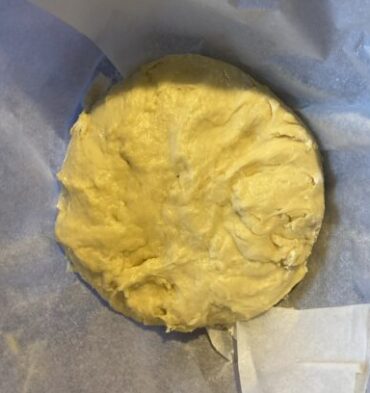
- Cover the bowl with a clean cloth and put it in a warm room or over a radiator. Let it rest. The dough must double in volume (count between 2 and 4 hours depending on the temperature - I let it rise for 4 hours).
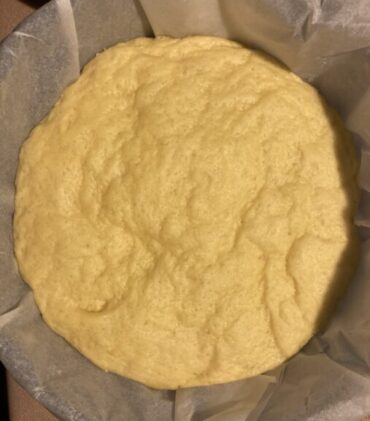
- If you make the dough the day before, you can put it in the bottom of your refrigerator, but take it out early enough the next day (about 2 hours) to warm it up (put it on a radiator for example).
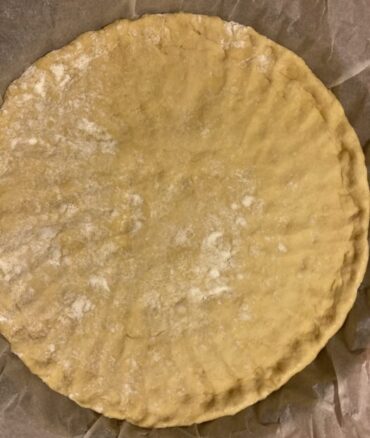
- Once the dough has risen, place it with baking paper in a large pie dish (I took a 30 cm diameter dish).
- Lower the dough on the paper with your fists to stretch it towards the edges. It is not necessary that the dough goes up all the way to the edges.
- Preheat the oven to 200 °C.
- Thinly slice the maroilles and cover the entire dough. Season generously with pepper.
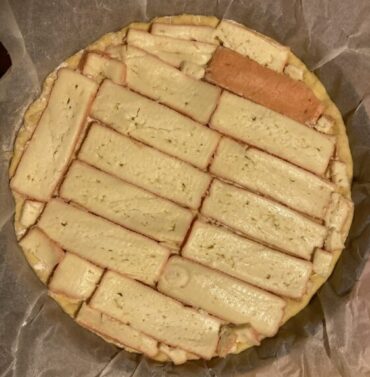
- Coat the maroilles with a thin layer of thick crème fraîche (2 tablespoons, no more).
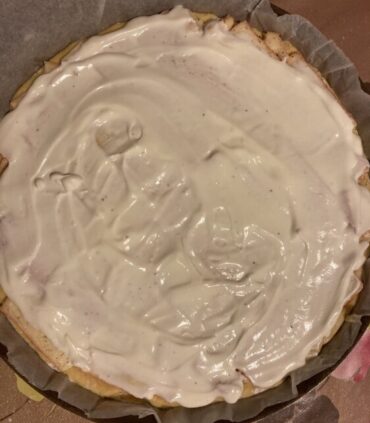
- Bake 20 minutes at 200°C and then 10 minutes more at 180°C. If the pie becomes too brown, you can cover it with a sheet of baking paper to finish baking.
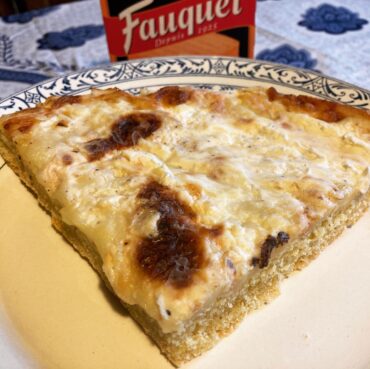
- Enjoy the warm tart, serve it with a simple green salad or endive salad, and with a good Northern beer of course.
Notes
You can add a beaten egg in the cream, I prefer without!
You can also try this version without cream, but the pie might be a little less soft.
Finally, for an even more intense version in maroilles, add 100 g to this recipe!